

































Wednesday July 23, 2008 / Filed under: Type Industry

TypeCon 2008 Goodie Bag Postcards

TypeCon 2008 3D Postcard Set from Mark Simonson Studio

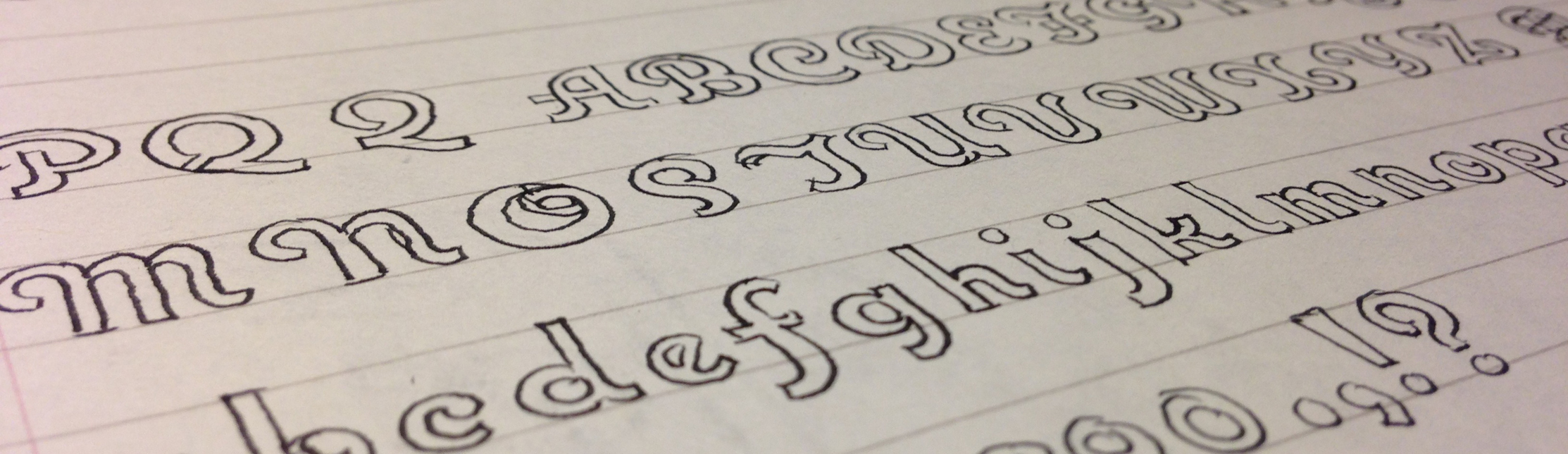
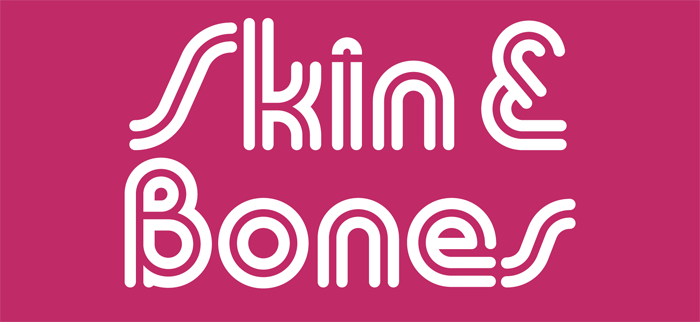
I’ve finally had a chance to settle down after this year’s TypeCon, which was one of the best I’ve attended. As promised, here is the set of 3D postcards I contributed to the goodie bag for those who were not able to attend:

Lakeside card

Coquette card

Felt Tip Roman card

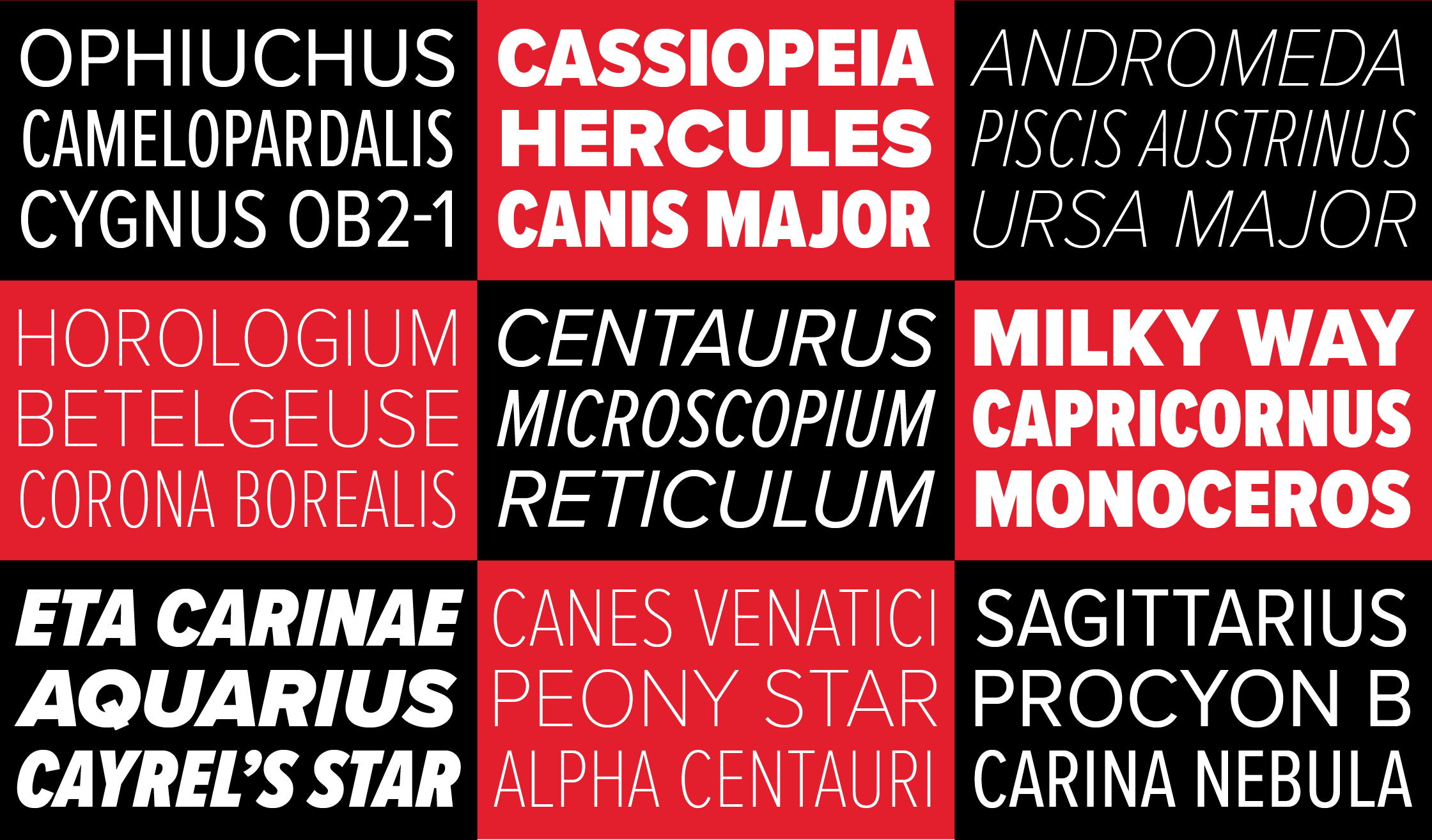
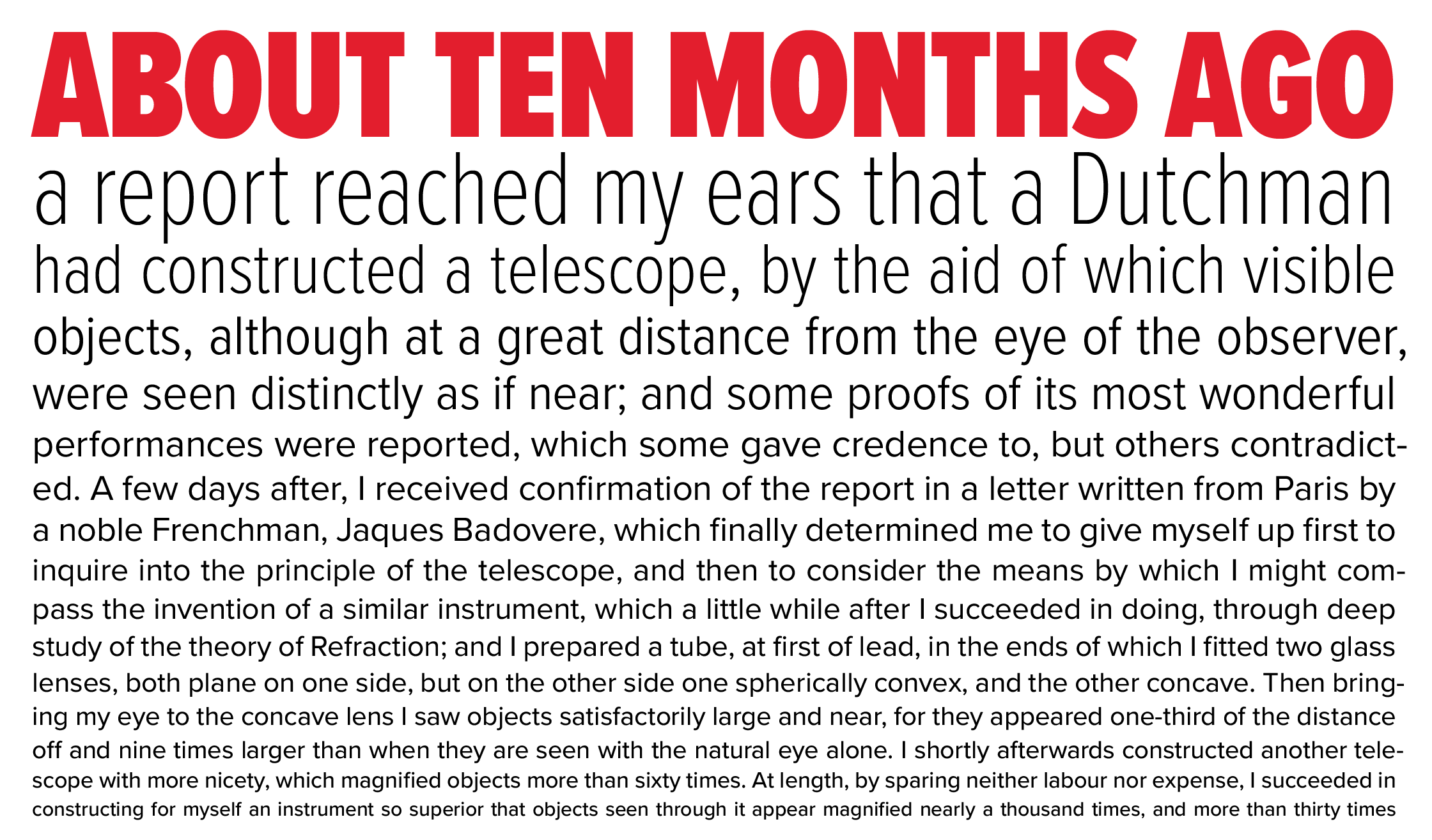
Proxima Nova card

Kinescope Snicker card

Mostra card

Tip: Click on the images to see a larger version. And, of course, you will need a pair of anaglyphic glasses with red and blue filters to experience the illusion of depth.

In fact, these RGB images work even better than the printed postcards for the 3D effect, probably because the colors are more pure. On the other hand, they are not as easy to mail.

    Permanent Link

Saturday July 12, 2008 / Filed under: Type Industry

TypeCon 2008 in Buffalo

I’m en route this weekend to TypeCon 2008 which is being held in Buffalo, New York, home of Buffalo Wings, Ani DiFranco and P22 (the type foundry). The workshops start on Tuesday and the main program kicks off on Thursday evening.

I’m a 24 Point sponsor this year which, among other things, lets me add something to the goodie bag that each of the attendees receives. Since this year marks my fifth anniversary of attending TypeCon, I decided to make it something special to mark the occasion.

In the middle of 2002, I was just barely in the font business, selling a few fonts a month on MyFonts.com, which had just started up about a year before. I did a graphic on my website to promote one of my fonts, Refrigerator. It was an “anaglyphic” image, meaning that if you viewed it with a set of those goofy glasses with the red and blue filters like they used for 3D movies in the ’Fifties, the image would appear to have depth. Here is the image:

Refrigerator 3D image

I don’t know whether it got anyone to buy a font, but not long after I posted it, I got an email from a guy named Stuart Sandler wanting to know how I did it. I sent him a full explanation of the process (which I posted here later in How to Make 3D Anaglyphs). He thanked me and, by the way, would I be interested in getting involved with TypeCon 2003, which was to be held in Minneapolis?

Stuart was (and is) the proprietor of the Font Diner, at the time operating out of Fridley, Minnesota, and was also on the board of SOTA, the organization responsible for TypeCon. My type design activities at the time were limited. I worked alone and didn’t really know anyone in the business. Getting involved with TypeCon 2003 opened a whole new world to me. I met type designers and developers from all over the world and for the first time had an inkling that I might actually be able to this for a living.

And now, five years after my first TypeCon, I’m a full-time type designer. And I can trace it all back to that 3D picture of a refrigerator. So, to commemorate the occasion, I have produced a set of six 3D postcards (glasses included) for each of the attendees of TypeCon this year.

Before the end of TypeCon, I will post the images on my site so everyone else can enjoy them. (You’ll have to provide your own glasses, though.)

    Permanent Link

Thursday July 10, 2008 / Filed under: Old Type & Lettering

T.E. Stone Ltd.

UK reader Aled Williams sent me this photo of a beautiful hand-painted sign on a hardware store in Bristol. Just lovely.

T.E. Stone Ltd. hand-painted sign.

Update (7/12/08): More photos from the same neighborhood by Jon Tan on Flickr.

    Permanent Link

Monday June 30, 2008 / Filed under: Old Type & Lettering

The Golden Age of Chrome

A couple of weekends ago, I attended the “Back to the Fifties” car show in St. Paul. This was the first time for me, despite the fact that we live within walking distance of the Minnesota State Fair Grounds, where the show takes place every year. Since the cars are always cruising around our neighborhood when the event is held, we never felt a pressing need to pay the admission fee. But this year, I decided to get a closer look.

I was glad I brought my camera. I realized what a great opportunity it was to snap photos of car nameplates—the stylized chrome lettering that adorns automobiles. The Fifties was an especially inventive period for “brightwork,” as it is called. For practical reasons, script styles were most often used—it meant that the nameplate could be molded in a single piece of metal. It was a treasure trove.

Here are some gems that I found:

July 9 Update: I just posted these photos (and a few more) on Flickr where you can see them a bit larger.

    Permanent Link

Monday June 16, 2008 / Filed under: Son of Typecasting

Indiana Jones and the Fonts on the Maps

In Indiana Jones and the Last Crusade, there is a funny scene in which Indy’s father breaks a vase over Indy’s head. As soon as he does it, he looks horrified—not because he’s mistakenly attacked his own son, but because he notices that it was a priceless Ming vase. Upon closer examination, he is relieved to discover the vase is a fake.

Now that the fourth (and last?) Indiana Jones movie is out, I made a similar examination of the use of type in the series, but I was not quite as relieved. For the most part, the type usage in each of the movies is correct for the period depicted. With one exception: The maps used in the travel montages.

Whenever Indy is traveling great distances, which happens in all the films, there is a montage of the airplane or boat superimposed over an animated map showing the route. It’s an old-fashioned convention, an homage to the movies of the Thirties and Forties. Unfortunately, the typefaces would be more at home a few decades later.

Still from Raiders of the Lost Ark

In Raiders of the Lost Ark (1981) which is set in 1936, we see ITC Serif Gothic (designed in 1972). The wide spacing feels right, and it does have an art deco feel, but it’s 1970s art deco.

Still from Indiana Jones and the Temple of Doom

Indiana Jones and the Temple of Doom (1984) strays even further in the anachronistic type department by using Helvetica (1957), which looks even less plausible than Serif Gothic.

Still from Indiana Jones and the Last Crusade

The third installment, Indiana Jones and the Last Crusade (1989), goes back to the formula used in the first film in many ways, including the use of ITC Serif Gothic again on the map. Not appropriate for a film set in 1938, either.

Still from Indiana Jones and the Kingdom of the Crystal Skull

Did they finally get it right in the fourth film, Indiana Jones and the Kingdom of the Crystal Skull (2008)? Not quite. They didn’t use Serif Gothic this time, or even Helvetica (which would just have been released in 1957, the year in which the film is set). Instead, they used Century Gothic, a font that didn’t exist until 1989. This wouldn’t necessarily be a problem since Century Gothic’s caps are very similar to Futura, which would be perfectly appropriate for 1957. Unfortunately, Century Gothic is also a clone of Avant Garde (1970), a typeface with very large lowercase letters, a quintessentially Seventies characteristic. (More about Century Gothic here.) So, not the best choice.

    Permanent Link

Friday June 13, 2008 / Filed under: Miscellany

Pangrammer Helper 2.0

Pangrammer Helper 2.0 is a new version of the pangram-making utility I created in 2005. The new version adds the ability to keep track of how many times each letter of the alphabet is used in your pangram. (Thanks to Scot Ober for the suggestion.)

In case you don’t know, a pangram is a phrase or sentence that uses every letter of the alphabet at least once. The most common one in English is “The quick brown fox jumps over the lazy dog.” Here are a few pangram links for more examples and information:

P22’s 2004 Pangram Contest Winners

Wikipedia’s Pangram Page

The Pangram Page

Craig Eliason’s Daily Pangram

Pangram Discussion on Typophile.com

NPR Sunday Weekend Edition 2002 Pangram Contest Results

    Permanent Link

Thursday May 29, 2008 / Filed under: Links

Font Nerd x Star Wars Nerd = This

How bold can Darth Vader be?

Via Daring Fireball.

    Permanent Link

Tuesday May 27, 2008 / Filed under: Old Type & Lettering

Ingento

Ingento logo

I dragged my old paper cutter up from the basement to use for something I was working on, and the “Ingento” label fell off it onto the floor. I had forgotten what a beautiful logo this is. Just lovely.

    Permanent Link

Friday May 16, 2008 / Filed under: Font News

New Metallophile Sp8 Fonts Released

Metallophile Sp8 Light sample

I released the Light and Light Italic styles of Metallophile Sp8 in 2003. The original plan was to add more weights later, but later never seemed to come. When I started getting requests from customers for more weights, I realized that had to change.

Metallophile Sp8 medium sample

And now it has. Introducing Metallophile Sp8 Medium and Medium Italic. These, like the original Metallophile Sp8 fonts, are based on a classic sans serif hot metal face, Spartan, set at 8 points.

My concept was based on the observation that digital versions of classic typefaces look quite different from their counterparts in metal type. The metal faces, printed on plate-finish paper using letterpress printing, had a warmth and texture that was lost in the precise mathematical world of digital typography. It was not only the imperfections of ink on cast metal, it was also the proportions and spacing, which were particular to the size of type. In digital type (with some exceptions), one size fits all. In metal type, every size was custom tailored. 8 point digital Futura looks quite different than 8 point metal Futura, especially in print.

Metallophile Sp8 Light versus Futura

There have been some attempts in digital type at simulating the look of classic metal typefaces, such as ITC Founder’s Caslon, but rarely has it been tried with more modern sans serifs. Metallophile Sp8 Light was an attempt, but without more weights it was limited in its usefulness.

The original metal Spartan Light was paired (or “duplexed”) with Medium as a boldface on the old Linotype casting machines. With that in mind, I decided Metallophile Sp8 Medium would be the best boldface for Metalophile Sp8 Light.

Metallophile Sp8 character set

As part of this process, the entire family was moved to the OpenType format, with a greatly enlarged character set, including extensive language support, a full set of math characters (based on the standard “pi” sorts of the metal type days), f-ligatures, a large set of pre-built fractions as well as arbitrary fractions via OpenType. The new fonts also include and alternate two-story lowercase “a” and alternate left quote marks, just like the original metal face. I redesigned the “ß” to give it the more traditional form, but included the more contemporary version I did in the original Metallophile Sp8 fonts as an alternate.

Metallophile Sp8 features

More weights are already in the works, which I hope to release this Summer, but I wanted to get these out as soon as they were ready.

Metallophile Sp8 Specimen

Metallophile Sp8 User Guide

    Permanent Link

Monday May 12, 2008 / Filed under: Font News

Metallophile Sp8 OpenType Coming Soon

Metallophile Sp8 OpenType sample image.

When I released Metallophile Sp 8 in 2003, the plan was to add more weights eventually. Now that I am converting my older fonts to OpenType format, that time has come. These four fonts should be available soon from my usual distributors. More details to come. More weights later this year.

    Permanent Link

Wednesday May 7, 2008 / Filed under: Personal Archaeology

Teenaged Me

Me as a teenager.

Drawn had an item the other day about a meme that’s going around: draw yourself as a teenager. I decided to cheat and post a drawing of myself as a teenager that I drew when I was a teenager. I’ve added explanatory notes.

At the time (about 1973) I had this idea to draw a comic that featured me and my friends and teachers. It never got beyond a few sketches.

Looking through the list where the meme started makes me feel very old. People in their early twenties laughing at how dumb they were as teenagers only a few years ago. A few years ago, I was pretty much the same as I am now, but I remember the feeling.

    Permanent Link

Monday March 24, 2008 / Filed under: Old Type & Lettering

Greetings from Mike Meyer

Mike Meyer is a sign painter based in Mazeppa, Minnesota. I first knew of Mike’s work from the beautiful hand-painted signs he did for a restaurant in St. Paul called Andy’s Garage. (Unfortunately, the original location where I saw them in St. Paul is closed now, but his signs can still be seen at the Minneapolis location in the Midtown Commons.) Last year, Mike discovered my site and we began corresponding by email a bit. Recently, he sent me some photos of cool signs he took on a trip through the south. With his permission, here are a few of them:

Photo by Mike Meyer, sign painter, Mezeppa, Minnesota

Photo by Mike Meyer, sign painter, Mezeppa, Minnesota

Photo by Mike Meyer, sign painter, Mezeppa, Minnesota

Photo by Mike Meyer, sign painter, Mezeppa, Minnesota

Photo by Mike Meyer, sign painter, Mezeppa, Minnesota

Photo by Mike Meyer, sign painter, Mezeppa, Minnesota

Photo by Mike Meyer, sign painter, Mezeppa, Minnesota

    Permanent Link

Thursday March 20, 2008 / Filed under: Links

My Brain Hurts

Photo of a photo of a freeze frame of Andrew Lehman by Joe Pemberton

Today I found a photo on Flickr taken by Joe Pemberton, one of the founders of Typophile.com, of his computer monitor displaying a freeze frame from the making-of section of the DVD “The Call of Cthulhu” showing director/producer Andrew Leman, who also makes typographic props and contacted me years ago in response to my Typecasting article, wearing my winning design from the 2002 Typophile t-shirt contest.

    Permanent Link

Wednesday March 19, 2008 / Filed under: Personal Archaeology

For Posterity

Would it surprise you to learn that I am a pack rat? When it comes to things like books and printed material about type, this can be a good thing, as it gives me a rich resource library I can tap whenever the need arises (and it frequently does). When it comes to other things, like old computer software, it is a complete waste of time and space.

It’s not hard to see how it happens. When it is new, software is not cheap (it didn’t used to be, anyway). So, even if you are not actively using it, it feels like it still has value. And how can you tell exactly when a piece of software is no longer useful and the chances of ever running it again are nil? It’s easier to just put it on a shelf and forget about it.

Well, time passes and it becomes much easier to see how little it’s worth to you. But then the question becomes: What to do with it all? I couldn’t bear to chuck it all in the trash (it’s a sickness, I know). Surely there must be somebody somewhere who would be happy to take it off my hands? And so there is: Dan’s 20th Century Abandonware (a.k.a., D2CA).

A few weeks ago, I shipped eight cartons of old Mac software to Dan as a donation. Some of it dates back to the first year of the Mac’s existence (Andrew Tobias’ Managing Your Money). Some of it I bought with high hopes, but never really used (Think Pascal). But most of it simply went obsolete (TOPS networking software).

As he promised, Dan posted a formal thank you on his home page—complete with photos and a listing of everything I sent. Now, if I ever feel a pang of regret, I can go to Dan’s site and still see all my old stuff, comforted that it has found a loving home, instead of an existence of guilty, dusty neglect in my basement. My hat (if I had one) is off to Dan for graciously and willingly accepting my donation.

Of course, this was just the stuff I don’t need any more.

    Permanent Link

Monday March 17, 2008 / Filed under: Font News

Introducing Filmotype Zanzibar

Filmotype Zanzibar sample setting

Zanzibar is the second Filmotype font I’ve digitized. (The first was Glenlake.) At first glance, I didn’t think much of it. But when I started looking more closely, I realized I’d never seen anything quite like it and decided I needed to do it.

The film font master

That “Zanzibar” is nearly an anagram of “bizarre” seems fitting. The surviving people from Filmotype (later Alphatype) have not been able to tell us who designed this gem, so we have no record of the designer’s intentions. Released in the early 1950s, it seems somewhat inspired by the work of Lucian Bernhard (Bernhard Tango, 1934) and Imre Reiner (Stradivarius, 1945). At first, it appears to be a formal script, but there are no connecting strokes. It would be better described as a stylized italic, similar to Bodoni Condensed Italic or Onyx Italic, with swash capitals.

Filmotype Zanzibar sample setting

About those capitals: If they were plans for roller coaster tracks, they would either be unsafe or very exciting to ride. I have rarely seen such a whimsical combination of spirals and angles. Perhaps the happy result of one too many martinis?

Filmotype Zanzibar sample setting

The overall effect—a mix of hairlines, swelling strokes, and dots—reminds me of musical notation. I kept this in mind as I filled out the missing characters. Film font designers had it easy. The original design included only caps, lowercase, numbers, and a minimal set of punctuation and currency symbols—about 70 characters. The digital version contains over 400 characters, including support for most Latin-based languages, math symbols (you never know), user-defined fractions (OpenType support required), and all the usual characters you expect in a modern font.

Filmotype Zanzibar sample setting

I also added a few alternate characters to address a design flaw in the original. The lowercase b, h, and k all have a little hook at the top that goes to the left. Unfortunately, when one of these characters follows an f or l, it causes an unsightly collision. Moving them apart only makes it worse. To address this, I created hookless versions of all three that come into play automatically when you enable the OpenType Contextual Alternates feature in your layout or graphics program.

Filmotype Zanzibar is available now at Font Bros.

    Permanent Link

Tuesday March 11, 2008 / Filed under: Old Type & Lettering

Amazing Old Album Covers

A record album from 1949Ever wondered why albums are called “albums”? At one time, a record album was literally an album that contained records.

A few years ago, I ran across a handful of them in an antique store. They were all from around 1949 or so and contained 45 r.p.m. discs. A lot of the records were missing, but I had to buy them because they had the most amazing cover designs. I wonder who designed them?

Fred Waring Music/Cole Porter Songs

Fred Waring Music/Jerome Kern Songs

Great Operatic Love Duets

The first two are Fred Waring albums on the Decca label and the third is a collection of opera duets on RCA Victor. They remind me of the new wave album covers of the early Eighties used by groups like The Art of Noise. Or maybe it’s the other way around. I love how “45” is put in quotes on the RCA album—as if it’s not really 45 r.p.m.

Benny Goodman Sextet Sessions

This Columbia Records Benny Goodman Sextet album seems to have some Joan Miró influence. Spaced out Bodoni Italic, dotted lines, bee-bop cartouches—what’s not to like? Notice how they advertise that the records are “unbreakable.” This must have been a big marketing issue at the time.

King Cole at the Piano

King Cole Trio Volume 4

The last two are Nat “King” Cole albums released by Capitol Records. They both feature bold, lively abstract designs in which Cole is represented by a crown. In the first one, it even looks kind of like him. The piano is reduced to a big red shape (the lid) and a few small white ones (the keys) with emanating sound waves tying it all together. The second one uses sound waves again, but shown more like a stream of air flowing around the musicians. Whatever. It’s cool.

    Permanent Link

Saturday March 8, 2008 / Filed under: Recent Work

MoFi

MoFi logo

A year or two ago I lettered a logo for a company called Mobile Fidelity — MoFi for short. They do high-end recordings for audiophiles. I got a tip from the designer whom I worked with on the job that MoFi was featured in a recent American Express ad, and that the logo shows up near the end of the ad. Here’s a better look at the logo:

MoFi logo

(Thanks to David Collins for the tip.)

    Permanent Link

Thursday February 14, 2008 / Filed under: Links

"The Dating Game" for Fonts

In honor of Valentine’s Day, Extensis has posted a silly little game called TYPEmatching wherein you attempt to find romantic match ups between common typefaces.

    Permanent Link

Wednesday February 13, 2008 / Filed under: Old Type & Lettering

Adam Top Hats

Logo on hat box

Logo on a hat box, seen in an antique store in Oneonta, New York, July 7, 2007. Those are some snappy caps.

    Permanent Link

Wednesday February 6, 2008 / Filed under: Font News

Introducing Lakeside

I haven’t been posting much to Notebook lately because I’ve been, well, busy. The thing I’ve been busy with is this:

Lakeside font sample

Lakeside is a script face I’ve been working on for the past two years. It was initially commissioned by an independent filmmaker for use in some film titles. It’s based on the hand-lettered titles of the classic 1944 film noir classic “Laura.”

An unusual feature of Lakeside is that it has three styles of capital letters suited to different uses:

Lakeside capital letter options

There are normal caps for, er, normal use; over-sized caps for a fancier appearance; and smaller, plainer caps for all-caps settings—something not normally possible with a script font like this.

Lakeside takes advantage of the OpenType format to put a virtual lettering artist at your fingertips. Here is the font with OpenType Contextual Alternates turned off and then on:

Context sensitive characters demo

Notice how each letter tailors itself to its position within a word, using a different form depending on whether it comes at the beginning, middle or end. Notice also how the crossbar on the lowercase “t” seems to “know” about adjacent letters and adjusts its width appropriately. (It’s not actually “a little bit too tight,” it’s just that those words are good for showing how the magic works.)

For more information, see the Lakeside Specimen Sheet (496k PDF) and the Lakeside User Guide (1mb PDF).

Licenses for Lakeside can be purchased at Font Bros. Other venues will be added soon.

(Note: Last year I mentioned this font on Notebook when it was still under development. At that time, it was to be called “Launderette.” Unfortunately, that name was taken—twice—so I chose the name “Lakeside” instead.)

    Permanent Link

Thursday December 20, 2007 / Filed under: Links

Arial Exam

Ever notice how the font name “Arial” looks like a certain other word sometimes? (Via DaughterNumberThree)

    Permanent Link

Notebook Index

T-shirts with original lettering designs available here.

Font Index

Lakeside Filmotype Glenlake Kinescope Snicker Blakely Coquette Goldenbook Mostra Metallophile Sp 8 Refrigerator Changeling Sharktooth Felt Tip Roman Felt Tip Woman Felt Tip Senior Kandal Proxima Nova Proxima Nova Condensed Proxima Nova Extra Condensed Proxima Sans Grad Anonymous Raster Gothic Condensed Raster Bank